

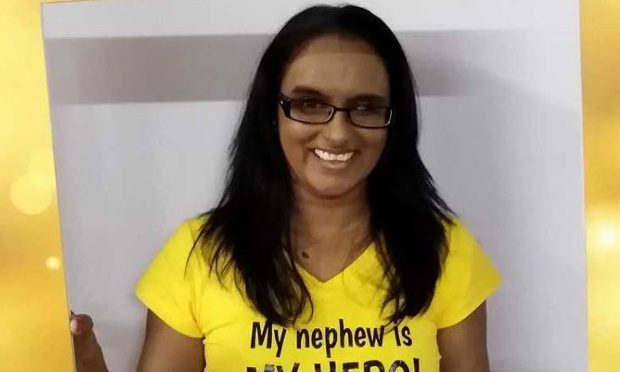


By Dr. Radica Mahase
It took me four years to get my child diagnosed.
“The first time I made an appointment I got a date 13 months later. A young doctor saw him and said that nothing was wrong with him although at four years he was not talking and he refused to play with other children. The doctor said once he starts school he will socialise and speak more.
“After a year of waiting for him to develop (as the doctor told me to do), and waiting another 11 months for an appointment, he was seen by an experienced paediatrician who diagnosed him with autism and speech delays.”
Getting a medical diagnosis for your child can be a daunting task. In most cases parents get their children diagnosed so that they will know what is going on.
One parent noted, “I knew my child was not meeting milestones and I just needed to put a name to what my child was experiencing so that I could help my child in the right way.”
In other cases, a diagnosis is needed to know what types of interventions are needed or to access special services in education or disability grants.
In some developed countries, diagnosis is deliberately delayed until a child reaches the age of five, out of fear of labelling young children.
However, in Trinidad and Tobago, diagnosis is often delayed because of serious flaws in our public healthcare system.
First, there are not enough paediatricians specialising in child development in the public healthcare system in Trinidad and Tobago. This means that the waiting period for an appointment ranges from five to 18 months, depending on the location of the clinic.
For parents in Tobago, the waiting period is an average of two months.
Also, children are not guaranteed to be seen by a paediatrician specialising in child development on their visit.
One parent noted, “My child was seen by a young doctor who obviously wasn’t experienced enough, because although my son was three years old and not speaking, he told me that nothing is wrong. How can you say that nothing is wrong with a three-year-old who is not speaking?”
Secondly, children from lower income brackets cannot access diagnosis privately because of the high cost. The cost of diagnosing a child privately ranges from $1,500-$5,500.
One parent said, “I had an appointment for September 2019, but we waited for two hours and my son got frustrated and had a meltdown.
“I got another appointment for March 2020, but the clinic was cancelled because of COVID.
“My son is almost seven, and he’s getting more aggressive and doesn’t speak, but I cannot afford to take him to be diagnosed privately so I am still waiting for the clinic to call us.”
Despite the increase in the prevalence of intellectual and developmental disabilities in Trinidad and Tobago, and the demand for more services to cater to the development of children, the Ministry of Health has not made any significant progress in improving its healthcare services for developmental disabilities.
From individual parents accounts, it appears many primary healthcare workers are neither trained nor prepared to care for this population.
It is crucial that the Ministry of Health expands its services to treat all types of disabilities. It needs to provide a variety of diagnostic, assessment, and therapy services for children and adolescents with all kinds of developmental disabilities.
Measures [need to be put] in place to decrease the ridiculously long waiting period for a child to be diagnosed by employing more child development specialists. It needs to offer a variety of therapy services so that every child will have equal access to therapy.
Currently in Tobago, there is one person who does both occupational and speech therapy while in Trinidad, there is only one speech therapist at the San Fernando General Hospital!
In 2007, the UN General Assembly called on representatives of member states “to encourage early diagnosis, research and treatment interventions” in order to enhance the growth and development of people with autism so that they can live in dignity and live a full life.
This can happen when our public healthcare system starts to see people with disabilities as valuable members of society who should be afforded specialised healthcare services.
This article was originally written in collaboration with NewsDay Trinidad and Tobago by Dr. Radica Mahase, founder and director of Support Autism T&T. Support Autism T&T are a group of young professionals working as a pressure group for the recognition and assistance of autistic children. They also work with other autism-focused organisations across Trinidad and Tabago to promote autism awareness and acceptance.