

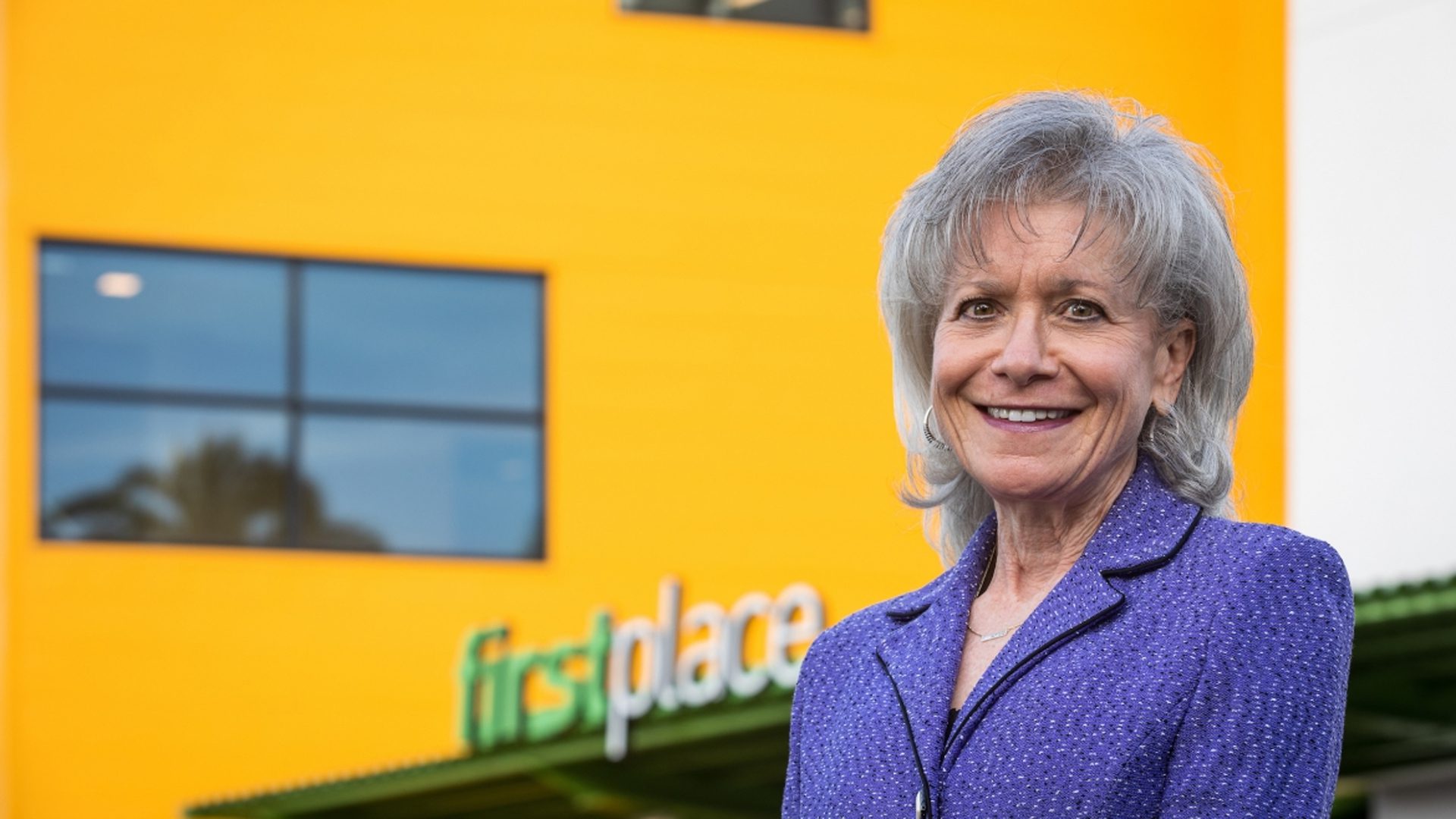
Throughout the world, a chronic shortage of affordable housing is out of the reach of autistic adults and national governments are unsure how to tackle to problem. But Denise Resnik, a mother from Arizona researched the problem herself and created something herself.
Resnick’s journey began in 1993, when her son was diagnosed on the autistic spectrum. Speaking to David Wallace of The Republic, she spoke of a sinking and helpless feeling when she was told to be ready to, “love, support and plan to institutionalize” him.
Over the course of almost three decades, Denise has helped pave the way for autism resources, understanding and acceptance in Arizona.
Utilizing her existing roots in real estate, community development and marketing, Denise gathered a group of people determined to find the answer that will benefit autistic people.
Denise wants what every autistic adult and parent of an autistic child hopes to have, a place for them to have the opportunity to have friends, a job and a home.
Resnik co-founded the Southwest Autism Research & Resource Center in 1997, which now supports thousands of individuals through its outreach and training programs and has a goal of putting autism services within reach of every Arizonan by 2030.
Then Resnik went to work to research housing options for neurodivergent people. She evaluated more than 100 different sites across the United States, trying to find a replicable, scalable and financially sustainable model.
Unable to find anything suitable, the former real estate went to work and founded First Place.
First Place is a residential community for autistic people and the wider neurodivergent population in Phoenix that opened it’s doors in 2018.
The goal is to create a space that can make the widest impact, offering homes alongside spaces where autistic people can grow and learn together.
“We may not be able to change the entire world, but we’re going to change the world for people who live here [in Arizona]” she said.
“And in so doing, use the power of our example to help change the world in other communities too.”
An in-house medical clinic recently opened, which aims bring down barriers to health care, something autistic people widely report with problems accessing transport. The clinic also has it’s own goals, by providing an important accessible service, as well as train medical professionals to serve the autistic community better.
Among the most helpful services though, is one-on-one cooking assistance, which autistic resident Harry Goralnik receives. Goralnik said that he appreciates the 24/7 concierge service at First Place, saying that they help deal with anything.
Related: ‘Demand is high’ for Sun Valley housing for autistic adults
Goralnik, 29, first moved in to the First Place residential community is September 2020. When his mother died in 2015, he had been looking for a place to live and does not believe that he’d get the kind of support anywhere else.
Speaking positively about the scheme, Goralnik said, “I don’t know if I could’ve asked for a better person to advocate for the autism spectrum community than Resnik.
“She’s just an amazing woman who is very caring, and she would do anything to make anyone feel like they were accepted and valued,” he said.
Harry’s kind words towards Resnik gave her a moment of reflection and realize her work is working.
When she thinks back to 1993, Resnik spoke of her vision for a better world for her son and the autism community, but never imagined it would have taken this long to come to fruition.
And in a letter to the Arizona Republic, Resnik said she doesn’t believe it is a journey that will end.
As a community developer, Denise is acutely aware of the need for many more homes to build, more professionals to train and jobs to create.
In the United Kingdom, parents of autistic people from the borough of Lewisham in south east London, are also aware of the need for more homes. They recently completed a batch of specialised housing last month.
But Resnik describes her son as being the “north star” in her quest to devote decades of her life towards autism research and development.
Resnik believes every step forward for the autism community also has positive implications for everyone else, citing how the Americans with Disabilities Act of 1990 was even appreciated by those without limited mobility.
It does take a long time to develop community, and in some cases it’s only one person, one organization, one institution, one policy change at a time. It does not happen overnight.