

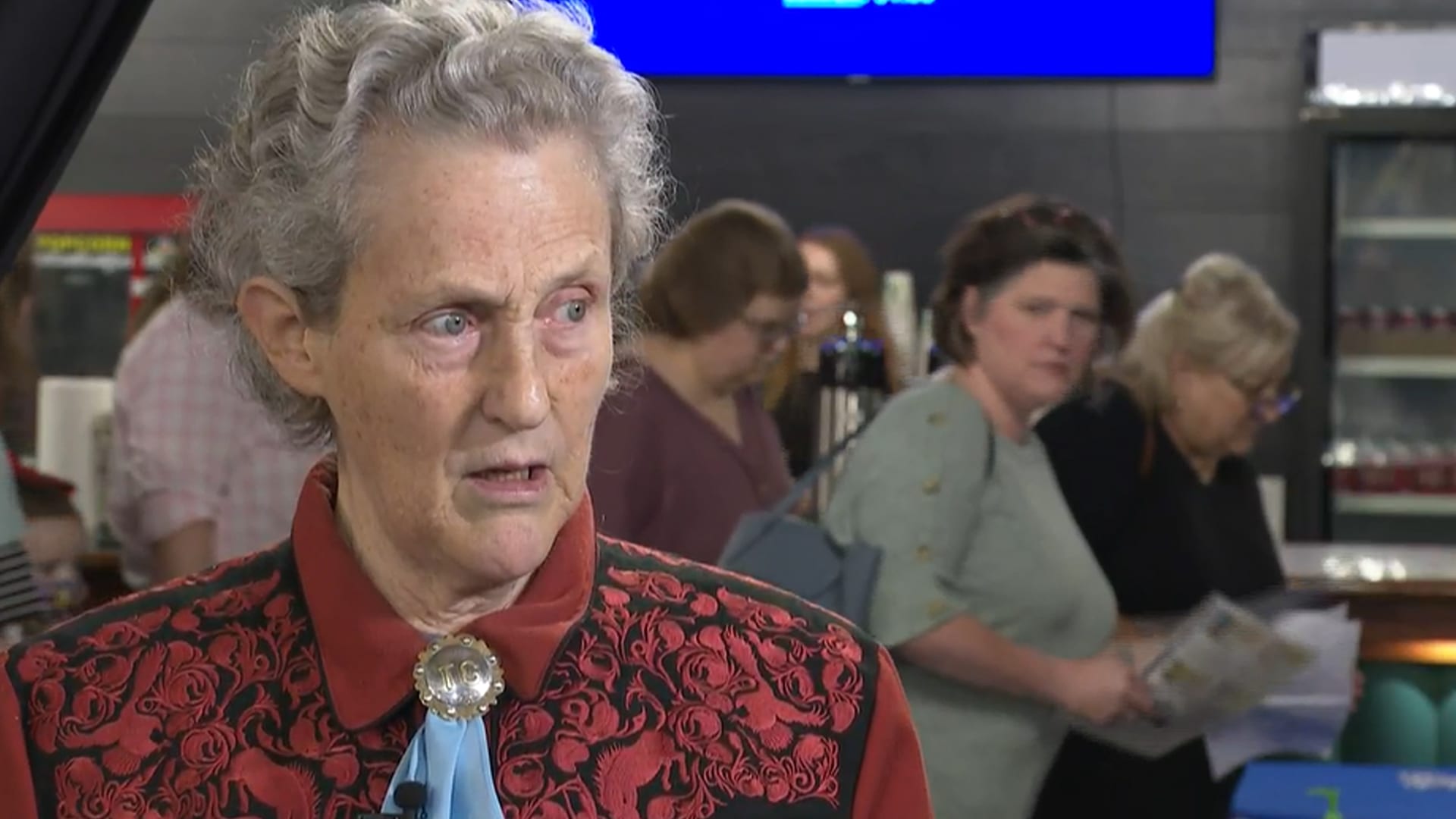


The autistic advocate Dr. Temple Grandin will speak at Coe College, Iowa tonight to inspire the local autism community.
The professor of animal behaviour and livestock husbandry has made many important contributions to autism, including documenting her own experiences of being an autistic adult.
Speaking to a local newspaper on Wednesday, September 22nd, Grandin said “What would have happened to Einstein in today’s educational system, since he had no speech until he was 3?
“I’m afraid he would have been put in an autism class and maybe become addicted to video games. That’s what I’m afraid would happen to him today.”
Grandin, now 74-years-old, was diagnosed as an autistic person at the age of five or six-years-old. She explained that she never spoke for years, and was originally checked for signs of deafness. At one point doctors believed she may have been brain damaged.
Despite Grandin’s struggles and social anxieties, from being bullied for being ‘weird’ — Grandin went on to become a success in an animal husbandry career, after studying at Colorado State University.
Temple is considered a pioneer of autism advocacy during her time, writing books and speaking at lectures, to help reduce the stigma society expects from an autism diagnosis.
“One of the things that I think is good is a lot of entertainers are coming out as being on the spectrum,” said Grandin.
“There’s a lot of famous people that are probably on the spectrum.”
Grandin’s autism advocacy has become more relevant as autism awareness increases around the globe, citing more adults now receiving autism diagnoses than ever before.
But some in the autistic community disagree, including one female autistic advocate who didn’t want to be named, “What Temple has said in the past about autism is disgusting. It’s eugenics.”
The professor has a special interest in the science of condition, and has written multiple books about the sequencing and biological markers of autism, where she has been misquoted for referencing other scientists for identifying the differences between autistic people with high-support needs and those able to function with minimal support.
But Grandin recognises that diagnosing more people, particularly for adults, is a comfort and relief that we should continue to pursue.
“With people that get diagnosed later in life, it can be really helpful,” Grandin admitted, noting the validation they feel when relationships they had had always been a struggle. She admits that is a good thing.
She also wants society to think differently about what it means to be autistic though — starting with the reality that different minds have different skills, and the world needs all of them.
“The main thing I’m going to talk about is the different ways that people think.
“I am a visual. I think completely in pictures,” explained Temple.
Other people think arithmetically, while some can think in words or a combination of the two and we have all different kinds of thinkers.
This message is important not just for autistic people but also their allies and their support networks, according to Bob Benson, assistant director of admissions at Coe College and former member of The Marquis Series.
Grandin’s advocacy aims to breakdown stigmas and stereotypes that relevant for everybody.
“I think now, more than ever, we really do need that,” said Benson. The more that we can change things on the local level, starting small and to inspire the local community, that change will eventually spread across the world in a positive way.
While Grandin is at Coe College in Iowa, she also plans to visit Professor Randy Christensen’s first-year seminar of ‘Reading the Human Brain’ which is inspired by Grandin’s own work.
“The overarching theme of the class is to help students understand their own biases, biology and thought processes, and allow them to gain the mental skills and habits to become successful college students and conscientious global citizens,” Christensen told local newspaper The Gazette.
“One of the benefits of attending a small private college like Coe in a small city like Cedar Rapids is the chance for one-on-one interactions with your professors (Dr. Temple Grandin) and the local community.” he said.
“Dr. Grandin’s visit is only going to strengthen those types of community connections and enrich [Coe’s] students college experience.”