

The origins of the jigsaw piece go back half a century and people seem to believe that the symbol has been naturally adopted. It never was the case, but it is a consequence of former marketing campaigns that have stubbornly remained, even if some organisations that used to use the puzzle piece, no longer does so. Here we hope to educate you about how the puzzle piece symbol began and what we hope will happen in the future.
The beginning of the jigsaw piece
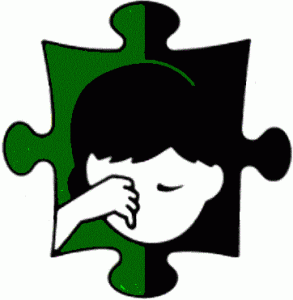
The origins of this symbol began in 1963 by the United Kingdom’s National Autistic Society. At the time, they believed that autistic people suffered from a puzzling condition, so they adopted a logo of a weeping child inside a the jigsaw relic.
While the National Autistic Society no longer mentions the use of the puzzle symbol, and hasn’t done so for a few years now, the symbol has been adopted in many other countries. Work is currently underway to campaign for removing the puzzle piece symbol when representing autism.
This ribbon filled with blue, red & yellow pieces
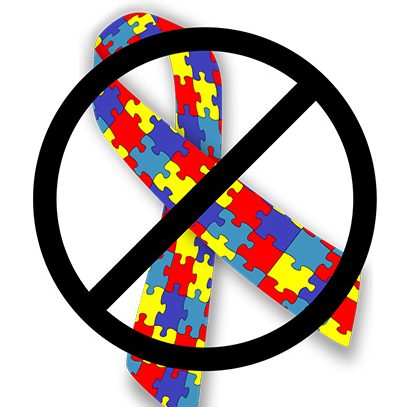
This ribbon shrouded by puzzle piece symbols in the colours yellow, red and blue has its origins in representing abusive therapies to encourage autistic people to change rather than accepting autistics for who they are. It takes its inspiration from the puzzle piece which started in 1963 when the United Kingdom’s National Autistic Society adopted the image of a weeping child inside a jigsaw piece.
Autism Speaks is universally disliked by many

Probably the most known organisation at the moment, who still use the puzzle piece symbol as their main identity. Autism Speaks has a very poor reputation when it comes to listening to the autistic community, so if you want to support autistic people, we advise you to not use this organisation.
Autistic people have attempted to make dialogue with this organisation over the years, and they continue to ignore them so it is best to ignore them and support the number of emerging organisations that autistic people do support.
Consider this identity chosen by autistic people

Autistic people feel really strongly about the puzzle piece symbol, it does not represent them in an authentic way. If you are considering adopting a new brand identity for your organisation and have come across this resource whilst doing your research in to how best represent autism, than the puzzle piece is an outdated image that is unlikely to positively reflect your business. Neurodiversity is the thing everyone should be striving towards, it is the human equivalent of biodiversity and it includes everyone.